

Similiar games





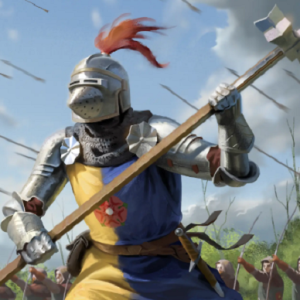









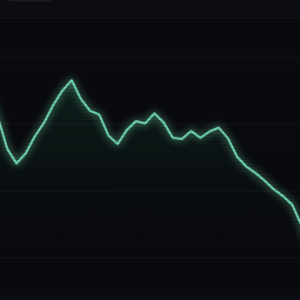
Market history becomes an obstacle course in Stonk Rider, a physics game where a motorcycle travels directly across the shape of a price chart. Rising values form hills and ramps, declines create drops, and repeated fluctuations produce uneven sections. The player must maintain momentum, control the vehicle’s angle, and continue moving until a collision ends the attempt.
Selecting a Course
There is no storyline, campaign, or character development in Stonk Rider. Each run begins by choosing a ticker connected to a stock, cryptocurrency, or market index. Players also select a chart period, including one day, one month, six months, one year, or five years. The game converts the selected data into a track while preserving its main rises and falls.
Motorcycle Physics
The vehicle responds to acceleration, braking, jumps, and changes in balance. Speed is useful for climbing steep sections, but excessive momentum can send the rider beyond a safe landing area. Adjusting the motorcycle in the air helps align both wheels with the approaching slope. Available actions include:
- accelerate to gain speed before climbs;
- slow down before sharp drops or short hills;
- tilt backward to raise the front wheel;
- tilt forward to prepare for descending terrain;
- jump when the track provides enough space;
- restart after a crash and attempt the route again.
Difficulty and Scoring
Stonk Rider has no predetermined sequence of levels. Every ticker and time range acts as a separate course, and difficulty comes from the amount of variation in the selected chart. Gradual movements produce manageable slopes, while sudden price changes create walls, gaps, and difficult landings. This system allows players to generate many routes and compare their results across different market histories.
A successful run requires reading the track ahead rather than reacting only to the section under the motorcycle. Build momentum before a tall rise, release acceleration while airborne, and adjust the vehicle gradually before landing. Repeating a route helps identify the places where braking or jumping is required. Points can be earned through distance and actions such as wheelies, stoppies, flips, extended airtime, close calls, and high-speed riding. Clean tricks increase a combo multiplier, making controlled landings more valuable. Crashing ends the attempt or removes the active multiplier, so maintaining balance is usually more useful than attempting a difficult stunt at every opportunity.
