

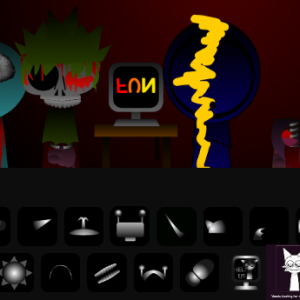
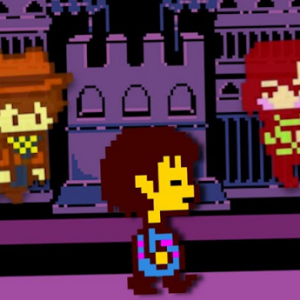
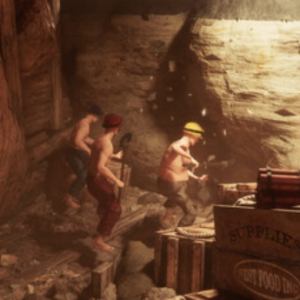
Similiar games








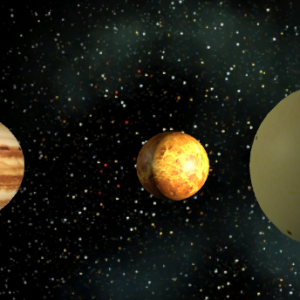
Solar System Sandbox is a space simulation game focused on planetary interaction, gravity systems, and open-ended experimentation. The gameplay allows players to create, modify, and observe celestial systems in real time without predefined objectives. Instead of following a story campaign, players interact directly with planets, stars, moons, asteroids, and other space objects to test how different variables affect orbital stability and collisions. The game is structured around simulation and observation rather than progression through missions.
Core Gameplay and Physics Systems
The main gameplay loop revolves around placing celestial bodies into space and adjusting properties such as mass, speed, and trajectory. Gravity calculations determine how objects move and interact with each other. Small changes in velocity or positioning can create stable orbits, collisions, or complete system collapse. Players can recreate known planetary systems or design entirely new configurations from scratch.
Sandbox Freedom and Experimentation
The game follows a sandbox structure with no mandatory goals or fixed progression path. Players are free to experiment with different scenarios, including planetary impacts, black hole interactions, or large-scale orbital adjustments. Some versions also include climate simulation and atmospheric effects, allowing observation of environmental changes caused by celestial events. Because the systems react dynamically, each simulation can develop differently depending on player actions.
- Create custom solar systems with planets and stars
- Adjust gravity, mass, and orbital trajectories
- Observe collisions between celestial bodies
- Simulate stable and unstable planetary systems
- Experiment with large-scale cosmic events
Visual Simulation and Interaction
Solar System Sandbox uses a scalable camera system that allows players to zoom from planetary surfaces to large interstellar views. Visual effects help communicate movement, orbital paths, and collision impact. Some simulations also include particle rings, eclipses, and debris systems generated dynamically during interactions. The interface is designed to support observation and manipulation without requiring advanced technical knowledge.
Replayability and Educational Value
Replayability comes from testing new system configurations and observing long-term outcomes. Since every simulation responds differently to adjustments, players can repeatedly experiment with alternative structures and orbital designs. The game also introduces educational aspects related to gravity, planetary motion, and astronomical scale through direct interaction rather than scripted lessons.
