

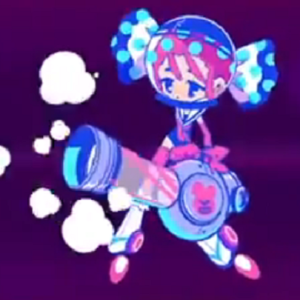
Similiar games




Muse Dash is structured as a rhythm action game where every song becomes a playable stage. The game does not depend on a detailed story or a sequence of narrative missions. Instead, the player chooses music, enters a side-scrolling run, and reacts to enemies and obstacles that appear with the beat. The main objective is to finish the track with good timing, keep the character from taking too much damage, and improve the final score.
How a Song Becomes a Stage
Each track in Muse Dash has its own pattern of enemies, hazards, and rhythm cues. The character runs forward automatically, so the player does not control movement in the usual platform-game sense. The important actions are attacks and avoidance. Targets can appear on the ground or in the air, and the player has to press the correct input at the right moment while the song continues.
What the Game Contains
A normal Muse Dash session is built from several connected parts:
- a list of playable songs;
- separate difficulty settings for many tracks;
- side-scrolling rhythm stages;
- ground and air targets;
- enemies, bosses, and obstacles;
- playable characters with different effects;
- companions that can support the run;
- score, combo, and accuracy results after each stage.
Progress Without a Story Campaign
Muse Dash does not have traditional levels with a plot that moves from chapter to chapter. Its progression is based on music stages, performance, and unlocks. A player may replay the same song to get a better score, try a harder difficulty, or test another character setup. This makes the game more about repeated improvement than about reaching the end of a storyline.
How to Play More Effectively
To play Muse Dash, the player should watch both lanes and listen to the rhythm at the same time. Ground enemies, air enemies, and obstacles can appear close together, so pressing too early or too late can break a combo. It is useful to learn songs on easier settings first, then move to harder charts after the rhythm pattern becomes familiar. Character and companion choices can also change how forgiving a run feels. The basic controls are limited, but the challenge comes from timing, pattern reading, and staying accurate through the whole track.
