

Similiar games



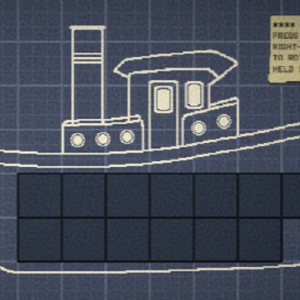









Made a Self-Aware Robot Escape is a compact exploration puzzle game built around incremental autonomy within a controlled space. The player directs a robot whose initial behavior is constrained by predefined systems and access rules. There is no explicit tutorial or objective marker; instead, the game invites the player to infer purpose through interaction. Progress emerges as the robot’s range of meaningful actions expands in response to understanding rather than upgrades.
Spatial Layout And System Constraints
The environment is a contained facility composed of interconnected rooms, each governed by simple but strict rules. Early movement is limited by locked passages, inactive interfaces, and conditional triggers. These constraints establish a baseline of predictability and encourage careful mapping of the space. As the player experiments, familiar rooms gain new relevance, demonstrating that the layout is designed for revisitation. Knowledge of how areas relate to one another becomes the primary tool for advancement.
Interaction Loop And Player Agency
Controls are intentionally minimal, allowing the player to focus on decision-making and observation. The robot interacts with panels, objects, and pathways in consistent ways, which makes outcomes readable. There are no enemies, timers, or penalties for failure. During play, the core loop repeatedly involves:
- activating or deactivating system nodes
- repositioning objects to alter access conditions
- observing feedback from environmental changes
- returning to earlier locations to apply new insights
This loop emphasizes reasoning over reflexes and supports methodical experimentation.
Puzzle Integration And Emergent Logic
Puzzles are embedded directly into the environment rather than isolated as standalone challenges. Many problems are systemic, meaning a single action can affect multiple areas. The game encourages players to think in terms of dependencies and state changes. Feedback is subtle but reliable, helping players confirm hypotheses and refine strategies. Solutions feel earned through comprehension of the system’s logic rather than discovery of hidden items.
Narrative is conveyed through spatial changes, system messages, and shifts in access. There are no dialogue scenes explaining the robot’s awakening; instead, autonomy is implied as restrictions loosen and options multiply. The facility itself functions as a narrative artifact, with each unlocked route signaling a departure from routine operation toward independent choice.
