

Similiar games





Hearts of Iron 3 is a strategy game that allows players to control a nation during the years before and during World War II. The game focuses on large-scale decision-making rather than direct control of individual soldiers. Players manage government policies, industrial production, diplomacy, research, and military operations while responding to changing global events. The historical setting serves as the foundation of the game, but the outcome of each campaign depends on the actions taken by the player.
Political and Economic Management
A significant part of the gameplay takes place outside the battlefield. Players must develop their economy by constructing factories, improving infrastructure, and managing resources needed for production. Political leadership can be adjusted through ministers and policies that affect national performance. Diplomacy also plays an important role, allowing countries to negotiate agreements, improve relations, or join international alliances.
Every nation has unique starting conditions. Some countries possess large industrial capacities and powerful armed forces, while others begin with limited resources and must focus on gradual development before becoming influential on the global stage.
Key Systems and Mechanics
Several major features drive the campaign experience:
- Industrial production and factory management
- Military recruitment and force organization
- Research of land, naval, and air technologies
- Diplomatic relations with other nations
- Resource management and international trade
Understanding how these systems interact is necessary for maintaining a stable and competitive country throughout the campaign.
Organizing Military Forces
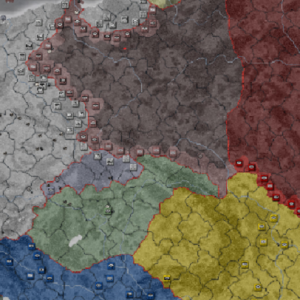
Combat in Hearts of Iron 3 takes place across a detailed world map where players move units between provinces and plan large-scale offensives. Land, air, and naval forces all require separate management. One of the game’s most detailed mechanics is its command structure, which allows armies to be organized into corps, armies, army groups, and theaters. This hierarchy affects combat efficiency and strategic control.
The game does not contain traditional levels or stages. Instead, players participate in lengthy campaigns that evolve over time. Different historical start dates offer different strategic situations, allowing players to enter the conflict at various moments and pursue different objectives.
Shaping the Course of History
While historical events appear throughout the game, players are not required to follow real-world outcomes. Countries can choose alternative political directions, form unexpected alliances, or engage in conflicts that never occurred historically. These possibilities create a different strategic environment in every campaign.
Success depends on balancing economic growth, technological advancement, and military readiness. Players who effectively coordinate these areas are better prepared to respond to global developments and achieve their long-term goals.
