

Similiar games











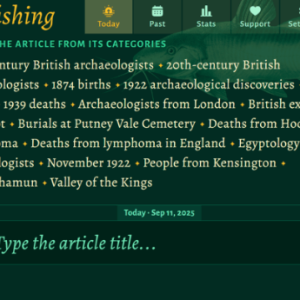
Catfishing Wikipedia Game is a daily browser quiz based on the category system used by Wikipedia. Instead of showing an article, image, or description, the game provides the categories connected to a hidden page. The player must use these clues to identify its title. Topics include people, locations, media, organizations, science, sport, and historical events. There is no storyline or fictional setting.
Rounds and Daily Content
The game presents ten puzzles per day, with every puzzle based on a different Wikipedia article. These rounds replace conventional levels, so there is no campaign with gradually unlocked stages. The same daily set is available to all players, and it changes after the scheduled reset. Articles are drawn from a curated database containing thousands of notable subjects with different levels of difficulty.
How the Guessing System Works
To solve a round, examine the category list and decide what type of article it describes. Enter the expected page title into the text field and submit the answer. The input system generally ignores differences in capitalization, accents, punctuation, and information placed in brackets. Some categories are broad, while others provide exact details that substantially reduce the possible answers.
Important clues may include:
- Birth years, death years, and active periods.
- Countries, cities, languages, or nationalities.
- Professions, awards, genres, and institutions.
- Events, companies, teams, or educational establishments.
After a guess is submitted, Catfishing Wikipedia Game records whether it matches the hidden article. A response that is close to the official title may receive additional feedback, allowing the player to reconsider the wording. The game also supports half points for answers that identify the correct subject without matching the required title exactly. Results are calculated after all ten puzzles and can be shared without directly revealing solutions.
Strategy and Available Modes
Catfishing Wikipedia Game does not contain equipment, upgrades, combat, or unlockable characters. Its progression comes from completing the daily rounds and improving at reading Wikipedia classifications. Begin with categories containing uncommon names, specific dates, or precise geographical references, then use broader clues to confirm the conclusion. The game is primarily designed for individual play, but several people can examine the same categories together or compare their scores after finishing the daily set.
