

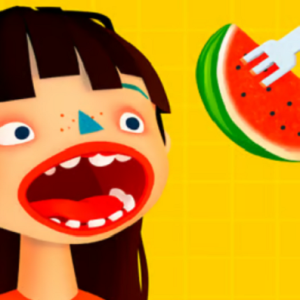
Similiar games














Toca Boca Kitchen 2 is a sandbox-style cooking game designed around open interaction rather than goals or scoring. The player is placed in a virtual kitchen with a set of ingredients, tools, and characters, and is free to experiment with food preparation in any order. There are no instructions or win conditions, which allows the experience to focus on exploration and cause-and-effect relationships. The game encourages curiosity by letting players observe how ingredients change when sliced, cooked, mixed, or served.
Open Interaction And Kitchen Design
The kitchen environment in Toca Boca Kitchen 2 is organized to be immediately accessible. Ingredients are visible and can be dragged, cut, or combined without restrictions. Tools such as knives, pots, ovens, and blenders respond directly to player input, making interaction intuitive. Actions are reversible, and there are no penalties for mistakes. This structure supports free experimentation and removes pressure, allowing players to focus on understanding how objects behave rather than following steps.
Characters And Feedback System
Instead of points or ratings, the game uses character reactions as feedback. When food is served, characters respond based on what they receive, creating a simple loop of action and response. These reactions vary depending on preparation methods and combinations. The feedback system is visual and immediate, helping players connect their choices with outcomes without using text or numbers. This approach supports play without language dependence.
In the central part of play, users often engage with the following activities:
- Selecting and preparing different ingredients
- Using kitchen tools to alter food states
- Combining items in unexpected ways
- Serving dishes to characters
- Observing reactions to adjust future actions
Creative Play And Learning Flow
Toca Boca Kitchen 2 supports creative play by allowing repetition without limitation. Ingredients do not run out, and actions can be repeated as often as desired. This design encourages players to test variations, such as cooking the same ingredient multiple ways or combining unfamiliar items. The lack of structure allows each session to unfold differently, shaped entirely by player choice rather than predefined tasks.
As play continues, users often develop routines or preferences, but the game does not enforce progression. There are no locked features or unlockable content tied to performance. Instead, engagement comes from exploration and familiarity with interactions. This keeps the experience consistent over time while still allowing discovery through experimentation.
