

Similiar games











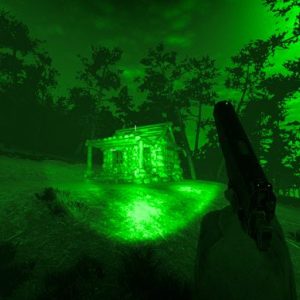
The Goldriver Project is a survival-focused game set in a remote natural environment where players are forced to rely on planning, exploration, and adaptation. What begins as an ordinary outdoor trip quickly shifts into a long-term survival scenario, as players realize they cannot leave the area freely. The game emphasizes player-driven discovery, placing responsibility on the player to understand systems, manage risks, and decide how to approach the unfamiliar territory.
Environment And Initial Conditions
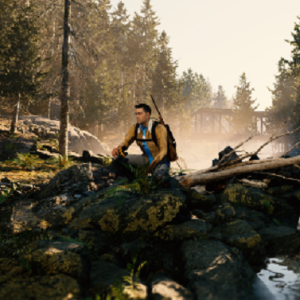
The world is presented as a large wilderness area made up of forests, lakes, trails, and isolated locations. Players start with limited supplies and no clear instructions beyond basic survival needs. Navigation is handled through landmarks and exploration rather than constant guidance. The environment itself becomes a primary challenge, as terrain, distance, and visibility influence every decision made early in the game.
Survival Systems And Resource Use
Core gameplay revolves around maintaining basic conditions required to stay alive. Hunger, hydration, temperature, health, and fatigue must all be monitored. Resources are gathered through exploration and careful use of the surroundings. Players are encouraged to think long-term, as poor preparation can lead to compounding problems later in the game.
Typical survival activities include:
- searching the environment for food and water
- crafting tools and basic equipment
- setting up temporary or permanent camps
- monitoring physical condition and supplies
- planning routes before long exploration trips
Exploration And World Progression
Exploration plays a central role in progression. As players move farther from their starting area, they encounter new locations that offer both opportunities and risks. The world changes over time, introducing shifting conditions that affect availability of resources and safe travel. Exploration is rarely linear, allowing players to choose between cautious expansion or more aggressive scouting.
Cooperative Play And Shared Responsibility
The Goldriver Project supports cooperative play, allowing multiple players to survive together. In group sessions, tasks can be divided, such as scouting, gathering supplies, or maintaining camp structures. Cooperation reduces individual pressure but introduces coordination challenges, as poor decisions by one player can affect the entire group. Communication becomes an essential tool rather than an optional feature.
Narrative Discovery And Player Choice
Story elements are integrated into the environment rather than delivered directly. Players uncover information by exploring locations, finding objects, and observing changes in the world. There is no fixed path that dictates how events unfold. Instead, progression depends on player choices, preparation, and willingness to take risks. The game avoids forcing outcomes, allowing players to shape their experience through action.
