

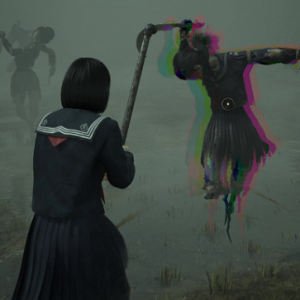
Similiar games













Silent Hill f introduces a new standalone narrative within the broader series, shifting focus to a different place, time period, and cast of characters. The game is set in a rural Japanese town during the 1960s, where everyday life is interrupted by the sudden appearance of fog and unexplained transformations. The player controls a young protagonist navigating familiar spaces that gradually lose their normal function. Progress depends on observation, problem solving, and limited confrontation rather than constant combat. The structure emphasizes uncertainty and slow accumulation of information.
Setting And Environmental Logic
The town in Silent Hill f is designed as a cohesive environment rather than a collection of isolated levels. Streets, schools, shrines, and residential areas are interconnected and often revisited under different conditions. Environmental changes signal progression and narrative shifts, with familiar locations altered by fog, growths, or blocked paths. The setting reflects social and cultural norms of the period, grounding the experience in a specific historical context. Movement through the town encourages careful navigation and spatial memory rather than speed.
Core Gameplay Structure
Gameplay systems focus on exploration, inventory limits, and interaction with the environment. Combat exists but is not the primary means of progression. Players are required to decide when to engage and when to avoid threats. Puzzles are integrated into locations rather than presented as separate challenges, often requiring the player to connect visual clues, written notes, and environmental details. Resources are restricted, reinforcing the need for planning and route awareness.
Midway through the game, players regularly engage with the following mechanics:
- Navigating fog-affected districts with limited visibility
- Solving location-based puzzles tied to local history
- Managing a restricted inventory
- Choosing between avoidance and confrontation
- Re-exploring altered areas after key events
Narrative Delivery And Player Agency
Silent Hill f presents its story indirectly, relying on implication rather than exposition. Conversations are brief, and written materials provide fragmented context. Player choices influence access to information and shape the interpretation of events rather than directly altering the plot structure. The narrative develops through repetition, absence, and environmental changes, encouraging players to form their own conclusions about characters and events.
In its final stages, the game emphasizes consequence and reflection. Earlier decisions affect available paths, encounters, and outcomes. The experience concludes without resolving every detail, reinforcing ambiguity as a structural element. Silent Hill f positions itself as a self-contained entry that expands the series framework through a new cultural lens while maintaining a focus on exploration, limitation, and indirect storytelling.
