

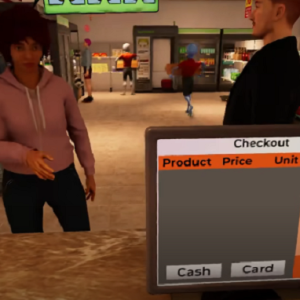
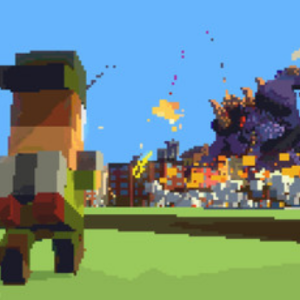
Similiar games














Roadside Research is a cooperative simulation game structured around managing a roadside gas station while fulfilling hidden investigative objectives. Players operate within a first-person environment where routine service tasks coexist with covert activities. The gameplay blends operational management with behavioral observation, creating a loop defined by multitasking and situational awareness. Rather than presenting a linear narrative, the experience unfolds through repeated work cycles and system-driven interactions.
Core Simulation And Daily Operations
The primary gameplay loop revolves around standard gas station responsibilities. Players restock products, refuel vehicles, clean facilities, and assist customers. These actions generate income used to maintain and expand station infrastructure. Task execution requires movement efficiency and time management, especially as customer traffic increases. The environment functions as a dynamic workspace where operational consistency directly affects progression. The absence of complex controls prioritizes accessibility and immediate interaction.
Suspicion Systems And Covert Mechanics
A central mechanic in Roadside Research is the suspicion management system. Certain player behaviors increase attention from customers or external authorities. Managing visibility and timing becomes essential to avoid disruptive consequences. Alongside routine duties, players engage in covert research actions designed to collect data.
Core gameplay systems include:
- Gas station service tasks
- Resource and income management
- Suspicion meter regulation
- Covert observation mechanics
- Upgrade-based progression
These elements collectively shape pacing and strategic decision-making.
Upgrade Structure And Progression Flow
Progression is defined through interconnected upgrade paths. Players invest earnings into station improvements, unlocking new equipment, layout adjustments, and operational tools. Parallel to these upgrades, research-related enhancements expand available interaction options. The dual-system structure encourages players to balance efficiency with investigative objectives. Advancement is not tied to narrative milestones but to resource allocation and task performance. This framework supports long-term engagement through incremental development.
Cooperative Play And Replayability
Roadside Research supports both solo sessions and multiplayer cooperation. In cooperative modes, players distribute responsibilities and coordinate actions to maintain operational stability. Group dynamics influence efficiency and risk exposure, particularly when managing suspicion levels. Replayability emerges from variability in task prioritization, upgrade strategies, and player coordination. Each session functions as an independent simulation cycle shaped by system responses and participant decisions. The design positions Roadside Research as a sandbox-oriented management experience emphasizing coordination, observation, and adaptive planning.
