

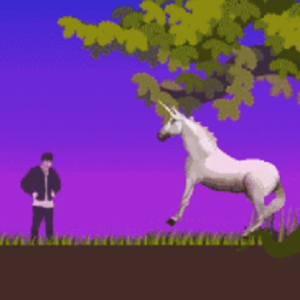
Similiar games






QWOP Horse is a physics-based control game that builds on the core idea of managing individual limbs through keyboard input. The player controls a horse attempting to move forward across a flat course. Progress is measured by distance rather than completion of a track. There are no opponents, time limits, or checkpoints. The challenge comes entirely from maintaining balance and coordination while interacting with an unstable physics system. Each attempt restarts from the beginning, reinforcing trial-and-error learning.
Control Scheme And Player Input
The defining feature of QWOP Horse is its control scheme. Instead of simple directional movement, the player manipulates different parts of the horse’s body using separate keys. Each key corresponds to a specific limb or joint, requiring careful timing to produce forward motion. Pressing keys without coordination often results in the horse collapsing or moving backward. The game provides no tutorial beyond basic key labels, leaving players to experiment. Mastery depends on understanding how small inputs affect momentum and balance rather than reacting quickly.
Physics And Movement Behavior
Movement in QWOP Horse is governed by exaggerated physics that prioritize instability over realism. The horse reacts strongly to small shifts in weight, making controlled motion difficult. Gravity, friction, and joint rotation interact in ways that often produce unexpected results. Forward progress is slow and inconsistent, especially during early attempts. Because there is no fixed animation cycle, every movement emerges from physics calculations rather than scripted motion. This makes each run unpredictable, even when using the same inputs.
Core Gameplay Loop
The gameplay loop in QWOP Horse is simple but demanding. Players attempt to move forward, fall, restart, and repeat. Over time, patterns begin to emerge as players learn which inputs reduce instability. Several elements define this loop:
- Independent limb control through keyboard input
- Physics-driven reactions without preset animations
- Distance tracking as the only performance metric
- Immediate reset after falling
These components create a cycle focused on experimentation rather than progression systems or rewards.
Difficulty And Learning Curve
Difficulty in QWOP Horse does not scale through levels or modifiers. Instead, it remains constant, with the player’s understanding acting as the only variable. Early attempts often result in minimal movement, while later runs may achieve longer distances through improved coordination. There are no upgrades or unlocks to reduce difficulty. Improvement comes solely from developing a mental model of how the horse responds to input.
