

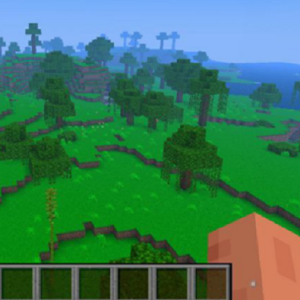
Similiar games












PojavLauncher is an Android application designed to run the Java Edition of Minecraft on mobile devices. It functions as a compatibility layer rather than a standalone game, allowing users to access the full desktop version within the limitations of mobile hardware. The launcher focuses on providing flexibility, enabling players to choose game versions, manage files, and customize controls. Its use case centers on portability and access rather than performance parity with desktop systems.
Purpose And Technical Scope
The primary purpose of PojavLauncher is to bridge the gap between desktop software and mobile platforms. It supports multiple Minecraft versions, from early releases to more recent updates, depending on device capability. The launcher uses custom rendering backends and input mapping to translate keyboard and mouse interactions into touch controls. Because of this structure, performance and stability depend heavily on hardware configuration and selected settings. Users are expected to adjust parameters to match their device rather than rely on automatic optimization.
User Control And Configuration
Configuration is a central aspect of the PojavLauncher experience. Players manage game directories, Java arguments, memory allocation, and control layouts manually. This level of access mirrors desktop modding practices, making the launcher appealing to users familiar with file management and configuration tools. While default presets exist, meaningful use often requires experimentation to balance performance and usability. The interface prioritizes function over guidance, placing responsibility on the user.
During regular use, players commonly interact with the following features:
- Selecting and installing specific game versions
- Adjusting memory and performance settings
- Customizing on-screen control layouts
- Managing mods and resource packs
- Switching rendering backends for compatibility
Compatibility And Mod Support
One of the defining aspects of PojavLauncher is its support for mods and custom content. Mods designed for the Java Edition can be installed using familiar loaders, though compatibility varies. This allows users to replicate desktop setups on mobile, within practical limits. However, not all mods perform reliably due to hardware constraints and input differences. Troubleshooting is often required, and users must evaluate trade-offs between features and stability.
