

Similiar games












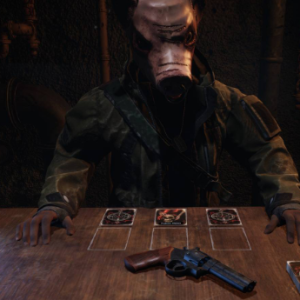
One Less Choice is a decision-driven psychological game where survival depends on how the player manages uncertainty within a structured duel system. The player is placed in a controlled environment and must compete against an opponent using a mix of prediction, limited information, and chance-based mechanics. The core experience revolves around making choices that reduce available options, increasing tension as the game progresses.
Decision Mechanics And Elimination System
The central mechanic in One Less Choice is based on reducing possible outcomes before resolving a turn. Players select multiple options, after which one is removed, leaving a final result that determines the outcome of the round. This system creates a layer of indirect control, where success depends on anticipating both the opponent’s decisions and the probability of elimination. Each turn becomes a balance between risk and calculated choice.
Round Flow And Supporting Systems
The game is structured around repeated rounds where each decision influences future conditions. Players accumulate resources or modifiers that can be used strategically in later turns. These elements may change probabilities, affect the opponent, or alter the consequences of outcomes. The flow of the game remains consistent, but each round introduces slight variations based on prior actions.
- Selection of multiple options with one removed before resolution
- Turn-based structure with alternating decisions
- Use of modifiers that influence round outcomes
- Resource accumulation tied to performance
- Continuous pressure through limited choices
Prediction And Adaptive Strategy
Success in One Less Choice depends on the ability to predict patterns and adjust decisions accordingly. Players must consider not only their own strategy but also how the opponent may react. Since outcomes are partially randomized, complete control is not possible, which increases the importance of adaptability.
Over time, players refine their approach by observing previous rounds. Identifying tendencies in outcomes or opponent behavior can improve decision quality. However, the system ensures that uncertainty remains, requiring constant adjustment rather than fixed strategies.
One Less Choice maintains engagement through its focus on constrained decision-making and evolving pressure. Each round reduces available options, forcing players to operate with less flexibility. The combination of structured rules and unpredictable outcomes creates a system where every choice carries measurable consequences within a controlled environment.
