

Similiar games






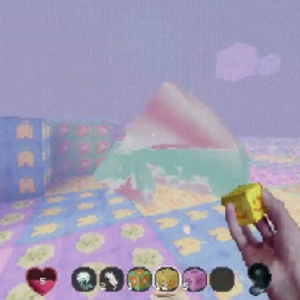
Lucid Blocks is a sandbox survival game set in a procedurally generated voxel world where exploration and construction are combined with resource management. The player enters a surreal environment composed of abstract landscapes, unusual structures, and unpredictable entities. The main objective is to gather materials, survive encounters, and build functional or creative structures. The game operates without a fixed storyline, allowing players to define their own goals within an open system.
Core Gameplay And Exploration
The gameplay is centered on movement through a continuously generated world. Players explore different zones, collect materials, and interact with objects that can be used for crafting or construction. Encounters with creatures and environmental hazards introduce additional challenges.
Exploration is not restricted by predefined paths. The world expands in multiple directions, creating a structure where progression depends on curiosity and decision-making rather than linear objectives. The player can choose to focus on survival, discovery, or building.
Crafting And Building Systems
A key system in Lucid Blocks is its flexible crafting mechanic, where items can be combined to produce new tools or objects. This system allows experimentation and supports different approaches to progression. Building is also unrestricted, enabling players to create structures using a wide range of blocks.
- Procedural world generation with no fixed layout
- Crafting system based on combining materials
- Construction using modular voxel blocks
- Tools and equipment affecting exploration
- Resource gathering tied to progression
Environment And World Design
The game world is designed with surreal and abstract elements. Locations may include open fields, enclosed spaces, or large structures that do not follow realistic logic. This design affects navigation and creates varied exploration scenarios.
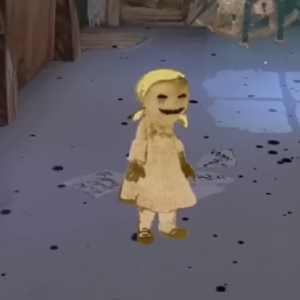
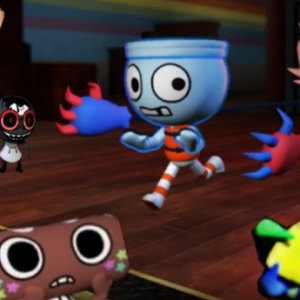
Creatures encountered in the world differ in behavior and function. Some can be avoided, while others require direct interaction. These elements contribute to a system where the environment itself becomes part of the challenge.
Visual Style And Atmosphere
The visual presentation uses voxel-based graphics combined with unusual color schemes and lighting. This approach creates a distinct environment that differs from standard survival games. Visual clarity is maintained, allowing players to identify objects and navigate effectively.
Sound design supports exploration by indicating nearby activity or changes in the environment. Audio cues are used selectively, helping players react to situations without constant background noise.
