

Similiar games








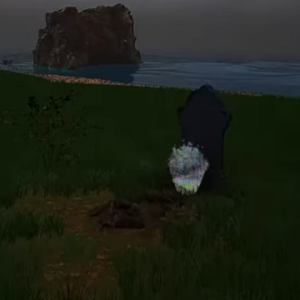




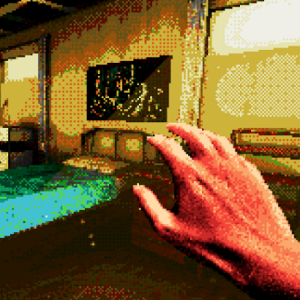
Eclipsium is a first-person exploration game built around disorientation, movement, and indirect interaction with an unstable world. The player controls a lone figure moving through spaces that resist clear interpretation and conventional structure. There is no explicit objective presented at the start; instead, progress emerges through observation and response to environmental changes. The experience relies on atmosphere and spatial continuity rather than dialogue or exposition, placing responsibility on the player to interpret events through action.
Spatial Logic And World Progression
The world of Eclipsium is organized as a sequence of interconnected environments that shift as the player advances. Locations do not follow a realistic layout and often transform once certain interactions occur. Paths may collapse, reconfigure, or reveal new passages without warning. This instability encourages forward motion while discouraging reliance on memory alone. Navigation depends on recognizing visual cues and understanding how spaces respond to the player’s presence rather than following a map or marker system.
Interaction And Mechanical Restraint
Player interaction in Eclipsium is minimal but deliberate. Actions are limited to movement and direct manipulation of select environmental elements. The player’s hand functions as the primary interface, capable of changing form to interact with specific objects or mechanisms. These interactions are often tied to sacrifice or transformation, reinforcing the idea that progress requires loss rather than accumulation. The absence of combat shifts focus entirely to exploration and consequence.
At the midpoint of the experience, players typically engage with the following actions:
- Moving toward distant visual signals to advance
- Activating mechanisms embedded in the environment
- Altering the hand to unlock new interactions
- Triggering changes that reshape nearby spaces
- Observing cause-and-effect relationships without guidance
Narrative Conveyed Through Environment
Eclipsium communicates its narrative through repetition, symbolism, and environmental shifts. There are no traditional characters delivering exposition, and written text is scarce or absent. Meaning is constructed through patterns, recurring imagery, and spatial echoes of earlier locations. The player is encouraged to form personal interpretations rather than uncover a definitive explanation. This approach treats narrative as an emergent property of movement and interaction.
In the final sections, Eclipsium emphasizes continuity over resolution. Earlier mechanics return in altered forms, and environments reference prior spaces without replicating them directly. The experience concludes without explicit closure, reinforcing ambiguity as a design choice rather than a gap. Eclipsium presents progression as a process of adaptation, asking the player to accept uncertainty and advance through observation, restraint, and gradual understanding rather than clear objectives or outcomes.
