

2 Player Games








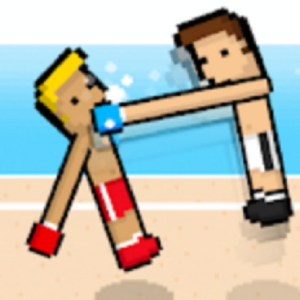

2 Player Games represent a category of interactive experiences specifically designed for two participants. These games focus on direct player-to-player interaction rather than large-scale multiplayer environments. The structure typically emphasizes competition, cooperation, or hybrid mechanics that rely on the presence of exactly two players. Titles within this classification appear across multiple platforms, including consoles, PC, mobile devices, and browser-based environments. The defining characteristic is the dual-participant design rather than genre or mechanical complexity.
Interaction Models And Gameplay Structure
The gameplay structure of 2 Player Games is built around symmetrical or complementary interaction systems. In competitive formats, players oppose each other through skill-based mechanics, strategic decisions, or reaction timing. Cooperative formats require coordination, communication, and shared problem-solving. Hybrid designs combine both approaches, allowing players to alternate between collaborative and competitive elements. The two-player framework creates predictable interaction dynamics where outcomes depend directly on the actions of the opposing or cooperating participant.
Many 2 Player Games operate within local multiplayer systems, though online implementations are also common. Local formats emphasize shared-screen or split-screen interaction, while online systems use network synchronization to maintain gameplay consistency. The limited player count simplifies balancing and reduces complexity compared to large multiplayer environments.
Common Features Of 2 Player Games
Although design variations exist, several recurring characteristics frequently define the category:
- Direct player-to-player interaction
- Competitive or cooperative mechanics
- Local or online connectivity options
- Simplified balancing systems
- Short, repeatable gameplay sessions
These elements represent structural tendencies rather than strict requirements.
Gameplay Variations And Subtypes
2 Player Games span numerous gameplay styles. Fighting games focus on reflex-based combat systems. Sports titles emphasize scoring mechanics and performance tracking. Puzzle-based games prioritize cooperation and logical coordination. Strategy formats rely on decision-making and planning. Arcade-style games emphasize simplified controls and rapid interactions. This diversity demonstrates that the classification is defined by player count rather than mechanical structure.
Player engagement in 2 Player Games is shaped by direct interaction dynamics. Matches often produce high variability due to human decision-making. Replayability emerges naturally through competitive rematches or cooperative experimentation. Progression systems may include rankings, unlockables, or performance tracking. The category functions as an interaction-driven framework where balance, pacing, and player behavior collectively define long-term engagement.
