

Similiar games
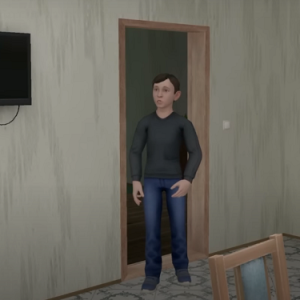

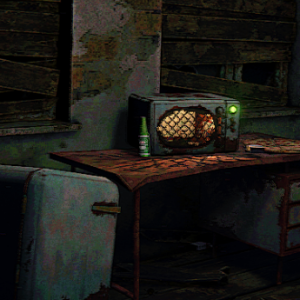
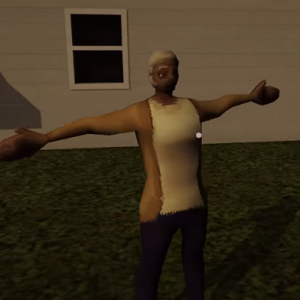



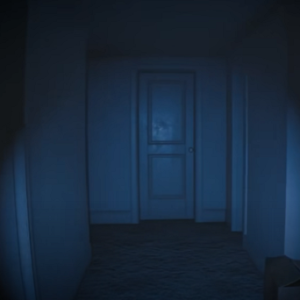

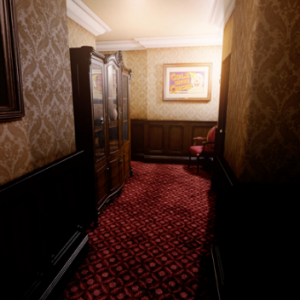




Bakso Malang Anomalies is a psychological horror game that deliberately avoids traditional horror imagery. There are no ruined castles, no explicit monsters, and no dramatic threats. Instead, the game is set in a place associated with routine and comfort: a small urban street centered around a bakso food stall. This choice is not accidental. By grounding the experience in an everyday location, the game creates a form of horror that feels personal, quiet, and disturbingly plausible.
The fear does not arrive suddenly. It grows slowly, shaped by repetition, familiarity, and the creeping realization that something ordinary has begun to behave incorrectly.
An Environment That Resists Explanation
At first, the world appears stable. The street layout is clear, the stall looks intact, and the atmosphere feels neutral. There is no immediate sense of danger. This calm establishes trust — and then gradually undermines it. Small inconsistencies begin to appear, often subtle enough to be dismissed. A light flickers at the wrong moment. An object appears where it should not. A sound repeats with unnatural timing.
The game never confirms what these changes mean. There is no narrator, no warning system, and no explicit feedback. The environment refuses to explain itself, forcing players to rely entirely on observation and intuition. The absence of certainty becomes a source of sustained psychological pressure.
Observation as the Only Defense
Bakso Malang Anomalies replaces action with attention. There are no tools to fight back and no mechanics designed to overpower threats. Survival depends on noticing changes and deciding whether the environment remains normal or has shifted into an anomalous state. Each decision feels heavy, not because of immediate consequences, but because of uncertainty.
Some anomalies are easy to miss. Others appear obvious, yet still provoke doubt. The game deliberately blurs the line between meaningful change and harmless variation, making players question their own perception. Over time, the true challenge becomes mental endurance rather than difficulty.
Repetition That Erodes Trust
Repetition plays a central role in shaping the experience. Players revisit the same space multiple times, creating familiarity through routine. This familiarity is then used against them. The game introduces variations that break expectations without announcing themselves. What was correct in one cycle may be wrong in the next.
As sessions progress, memory becomes unreliable. Players begin to doubt whether a detail has truly changed or if they are simply misremembering it. This erosion of trust turns repetition into a psychological trap, where confidence slowly collapses under constant ambiguity.
Sound and Silence as Narrative Tools
Audio design is restrained but deliberate. Ambient sounds, distant noise, and long stretches of silence create an atmosphere that feels tense even when nothing is happening. Silence is never neutral. It suggests anticipation, as though the environment is waiting for a mistake.
Visuals follow a similar philosophy. The game avoids visual excess, allowing changes to stand out clearly when they occur. This minimalism ensures that anomalies feel invasive rather than decorative. The world does not try to scare the player — it watches to see if the player notices.
Meaning Without Explanation
There is no traditional story told through dialogue or exposition. Instead, meaning emerges through accumulation. Each anomaly, each incorrect decision, and each repeated cycle adds weight to the experience. Players are encouraged to form their own interpretation of what is happening and why the environment behaves as it does.
This lack of clarity strengthens immersion. By refusing to define its rules or motives, the game keeps fear internal and personal. The horror feels less like a scripted event and more like a quiet breakdown of reality.
A Slow and Focused Horror Experience
Bakso Malang Anomalies is designed for players who appreciate slow, psychological horror driven by perception and atmosphere. It rewards patience, careful attention, and the willingness to sit with discomfort. Rather than overwhelming the player with constant stimuli, it applies pressure gradually, allowing tension to build naturally.
The result is an experience where fear is not loud or dramatic, but persistent. Every moment feels slightly unstable, every detail potentially wrong. The game does not chase the player. It waits, knowing that doubt itself is enough.
