

Similiar games








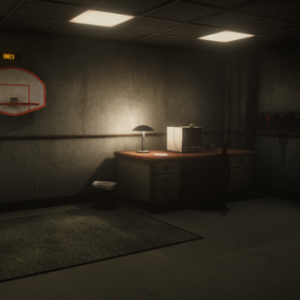




Bake Care is a short-form simulation game focused on structured interaction and routine-based tasks. The player is placed in a controlled kitchen space where the primary goal is to prepare baked goods by following clear but variable instructions. There is no character movement between locations or exploration of new areas. Instead, the experience remains centered on a single workspace, reinforcing repetition and consistency. Each session is self-contained and designed to be completed in a short amount of time.
Recipe System And Task Flow
At the beginning of each round, the player is presented with a recipe that outlines the required components and their quantities. This recipe functions as both instruction and constraint, limiting what actions should be taken during the session. The player must reference this information while working, as it is not enforced automatically. The task flow remains linear, requiring steps to be completed in a specific order to produce an acceptable result. Deviations are allowed, but they affect the outcome.
Player Interaction And Input
Bake Care uses a small set of interactions that repeat throughout the game. These actions form the core of the experience:
- reading and interpreting the current recipe
- selecting ingredients from a fixed set
- measuring quantities with available tools
- placing items into the preparation area
- submitting the finished batch for review
These inputs are simple but require attention, as the system does not correct mistakes during the process. The responsibility for accuracy is placed entirely on the player.
Evaluation And Feedback
Once a batch is completed, the game evaluates the result based on alignment with the original recipe. Feedback is provided at the end of the round rather than during preparation. This delayed response encourages the player to reflect on previous choices and adjust behavior in later sessions. There are no penalties that carry over between rounds, which allows experimentation without long-term consequences.
Variation comes from the randomization of recipes rather than from mechanical expansion. Each new task asks for different combinations and measurements, preventing the experience from becoming entirely predictable. Despite this, the environment and tools remain unchanged, emphasizing consistency over novelty.
