

Similiar games









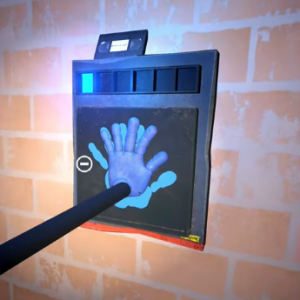
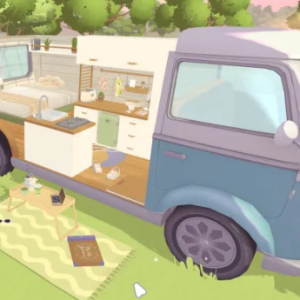


Architecture Design is a simulation-style game focused on planning, constructing, and organizing buildings or spaces within a virtual environment. Players take the role of a designer or planner, working with layouts, structures, and spatial relationships rather than traditional action mechanics. The gameplay emphasizes decision-making, where each element placed affects the overall functionality and visual structure of the project. This type of game belongs to a broader category of construction and management simulations, where players control development and layout choices.
Core Gameplay And Design Process
The main gameplay loop in Architecture Design revolves around creating and modifying structures. Players typically start with an empty space or predefined area and gradually add walls, rooms, and objects. Each decision influences how the space functions and how efficiently it can be used. The process often mirrors real design workflows, where planning, testing, and adjusting are continuous steps. In many cases, the goal is not only to build but also to optimize layout and usability.
Tools And Building Systems
Architecture Design games usually provide a set of tools that allow precise control over construction. Players can adjust dimensions, rotate objects, and experiment with different layouts. These systems are designed to simulate real architectural thinking, where spatial relationships and proportions are key factors. Games in this category often allow scaling from small interiors to larger environments, reflecting how architectural projects can range from individual rooms to entire complexes.
- Grid-based or freeform building systems
- Object placement and rotation tools
- Interior and exterior design options
- Structural elements such as walls and floors
- Visual customization through materials and colors
Strategy And Spatial Thinking
Success in Architecture Design depends on spatial awareness and planning. Players must consider how different elements interact within a limited space. Efficient layouts improve usability, while poor planning can lead to impractical designs. The game encourages players to think about flow, accessibility, and organization when placing objects or creating rooms.
The design process often involves iteration. Players build, test, and modify their structures to achieve better results. This reflects real-world design approaches, where solutions are refined over time rather than completed in a single step.
Architecture Design maintains engagement through its focus on creativity and problem-solving. Instead of fixed objectives, players are given systems that allow multiple solutions. The structure supports experimentation, where different design approaches lead to different outcomes. This flexibility makes the experience adaptable to both short sessions and extended projects.
